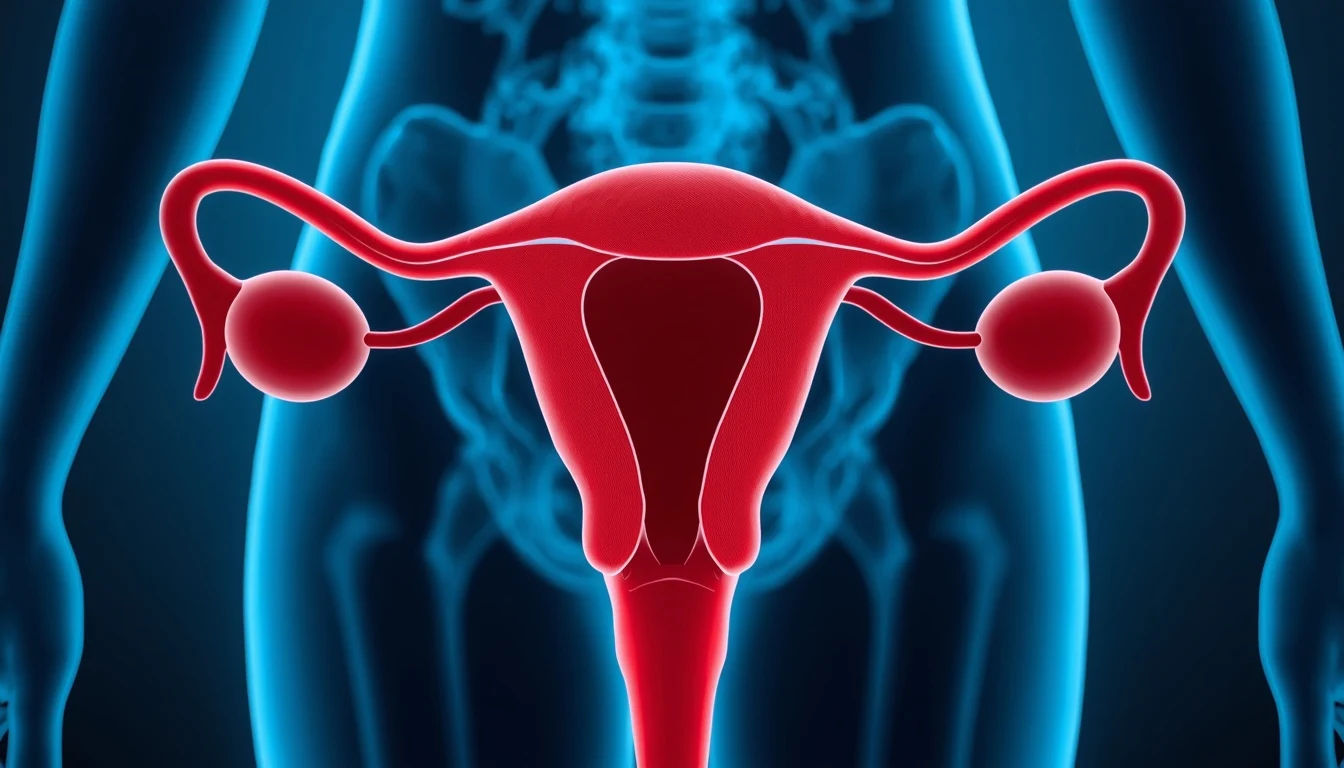
What your anatomy actually explains
More than half of all women will have a urinary tract infection at some point in their lives. For men, that figure is closer to one in eight — and researchers say the gap has almost nothing to do with hygiene. Below I walk through what the anatomy actually shows: why the gap exists, what drives recurrent infections especially after menopause, and how men’s urinary problems follow a completely different pattern — so you can bring better questions to any appointment.
Key Takeaways
- The female urethra is roughly four centimetres long; the male urethra runs eighteen to twenty — that structural difference is the primary reason women get UTIs far more often.
- After menopause, falling oestrogen changes the tissue lining the bladder and urethra; a landmark New England Journal of Medicine trial found intravaginal oestrogen cream cut recurrence rates from 63% to 16%.
- Men’s urinary problems tend to stem from an enlarging prostate squeezing the urethra from the outside — an obstruction problem, not a short-path problem — which is why the two conditions need entirely different treatments.
The one structural difference that explains most of the gap
The urethra is the channel that carries urine from the bladder to the outside world. In women, it runs roughly three to four centimetres. In men, it travels eighteen to twenty centimetres — about five times longer — curving through the prostate gland before it exits the body.
That extra length matters because bacteria have to travel further before reaching the bladder. Think of it as a corridor: a four-centimetre passageway is a very short commute for a microorganism; an eighteen-centimetre curved path is a far more hostile journey through defended territory.
The female urethral opening also sits close to the anal opening. E. coli — responsible for around eighty percent of all UTIs — lives harmlessly in the gut but causes trouble when it migrates the short distance to the bladder. With a brief, straight path and a nearby bacterial source, the structural conditions are almost mechanically favourable for infection.
This doesn’t mean any woman who gets a UTI is doing something wrong. The anatomy predisposes. Hygiene is rarely the meaningful variable that people assume it to be.
Why recurrent UTIs usually aren’t an immune system failure
Recurrent UTIs — broadly defined as two or more infections in six months, or three or more in a year — affect a significant proportion of women who’ve had a first infection. The common explanation is “your immune system needs a boost”, but that framing isn’t really what the evidence shows.
The more accurate explanation is geometry. A short, straight urethra makes it structurally easy for bacteria to ascend to the bladder. After sex, mechanical pressure can push bacteria toward the urethral opening — which is why post-coital UTIs are almost exclusively a female problem. In men, the longer, curved urethra makes that upward journey impractical for most bacteria most of the time.
Here’s the distinction that matters: a woman who gets frequent UTIs hasn’t failed at something. She has a structural configuration that makes these infections more likely, and understanding that shifts the conversation from blame to biology.
What happens to UTI risk after menopause
Oestrogen receptors line the bladder wall, the urethra, and the pelvic floor. While oestrogen levels are healthy, these tissues stay thick and elastic. The vaginal environment is also colonised by lactobacillus bacteria — a protective community that crowds out pathogens and keeps the local pH acidic enough to slow bacterial growth.
After menopause, oestrogen falls sharply. The tissue thins. The lactobacillus community shifts. Bacterial colonisation becomes easier, and recurrent infection becomes more likely.
A trial published in the New England Journal of Medicine tested intravaginal oestrogen cream in postmenopausal women with recurrent UTIs. The recurrence rate dropped from sixty-three percent to sixteen percent. That is not a modest benefit — it’s close to a complete turnaround, and it works locally, with minimal systemic absorption.
One important note: oral oestrogen doesn’t appear to produce the same effect. The local delivery route is what drives the benefit — a point the Cochrane review on this makes clearly. If you’re postmenopausal and dealing with recurrent UTIs, that’s a specific conversation worth raising with your GP, because this option doesn’t always come up without prompting.
The prostate: men’s equivalent structural problem
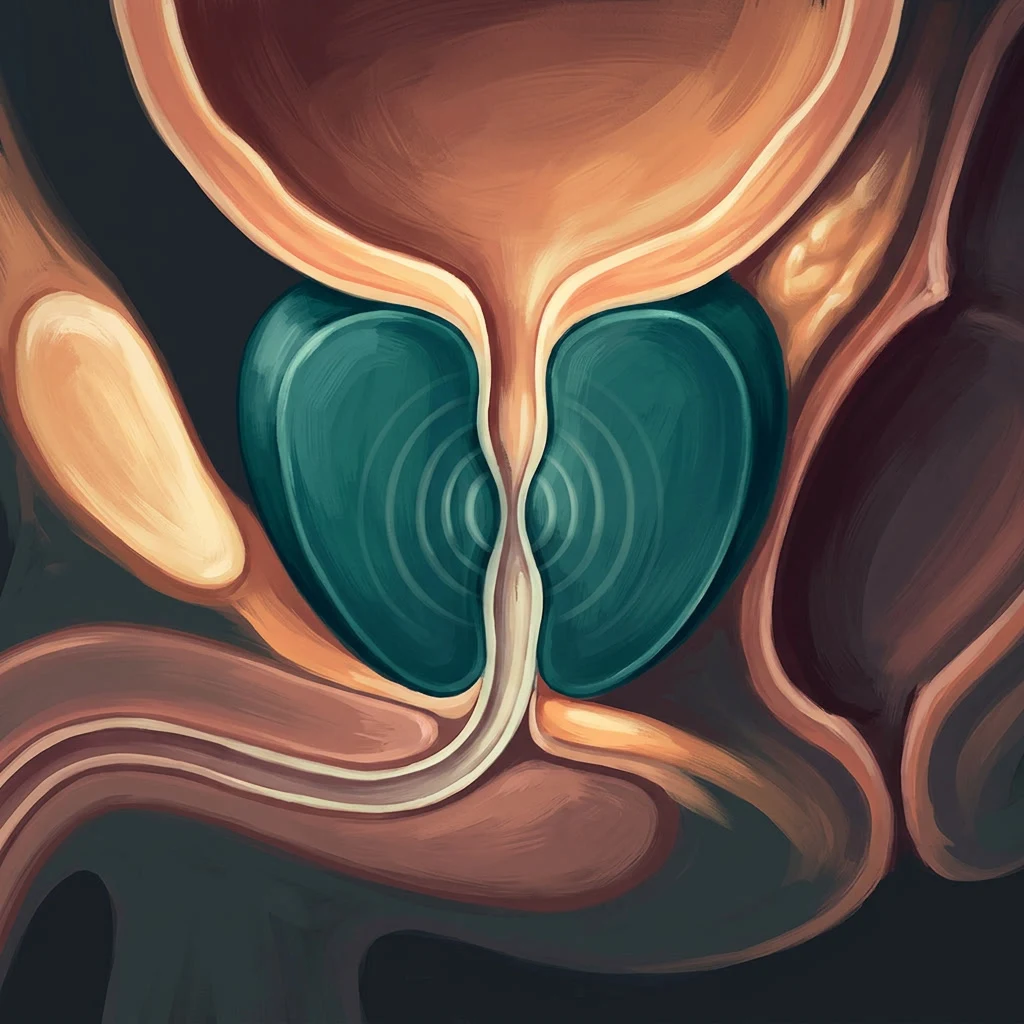
Men’s urinary anatomy creates a different kind of vulnerability — obstruction, rather than easy bacterial access. The prostate gland wraps around the male urethra just below the bladder, like a collar sitting on a pipe. As men age, it tends to enlarge, a common condition called benign prostatic hyperplasia (BPH). By their seventies, the vast majority of men show some evidence of it.
When the prostate grows, it tightens that collar around the urethra. Men develop a weak stream, difficulty starting, and more nighttime trips to the bathroom. The pump itself is fine — it’s a plumbing obstruction.
Alpha-blockers, a class of medication, relax the smooth muscle around the prostate and bladder neck, relieving the pressure effectively. But prescribe the same drug to a woman with urgency or leakage and you’d likely worsen her symptoms — because the underlying mechanism is completely different.
That’s the core point. Urgency, frequency, and disrupted sleep from nighttime trips to the bathroom can look similar from the outside, but the causes — a short urethra, thinned postmenopausal tissue, an enlarging prostate — are distinct. Treatment needs to match the cause, not just the symptom.
What anatomy can’t fully explain
Understanding anatomy helps, but it doesn’t predict every individual’s experience. Not every woman with a short urethra gets frequent UTIs. Not every postmenopausal woman sees her recurrence rate spike. Individual variation in the vaginal microbiome, immune function, and personal anatomy all play a role. The research describes patterns across populations, not guarantees for any single person.
The anatomy framing also doesn’t account for everything that influences UTI risk. Sexual frequency, contraceptive choice, fluid intake, and catheter use all matter. Anatomy sets a baseline vulnerability; other factors can raise or lower the risk from there.
The Bottom Line on UTIs and Urinary Anatomy
The female urinary tract is structured in a way that makes ascending bacterial infection more likely — a short, straight urethra positioned near the anal opening creates the conditions for frequent infection, with no personal failing involved. That vulnerability increases after menopause as oestrogen falls and protective tissue changes, and local oestrogen therapy has genuine, substantial evidence behind it for that specific group.
Men’s urinary problems tend to run in a different direction: obstruction from a growing prostate, rather than easy bacterial ascent. Both are common, both are predictable, and both are treatable — when the right cause is identified.
Knowing your anatomy doesn’t replace a diagnosis, but it gives you a better framework for the conversation when something goes wrong.
Frequently Asked Questions
Is there anything I can do to reduce UTI risk if I’m prone to them? The evidence-supported options for women include staying well-hydrated and urinating after sex (to mechanically flush bacteria from the urethra). For postmenopausal women, intravaginal oestrogen is worth discussing with a GP. Cranberry products have mixed evidence — they may reduce recurrence slightly in some populations, but they’re not a substitute for treatment once an infection has taken hold.
Does having a shorter urethra mean I’ll definitely get UTIs? No. A short urethra raises structural susceptibility, but many women with typical anatomy never have a UTI. Individual microbiome differences, immune factors, and behaviour all shape the actual risk. Anatomy predisposes; it doesn’t determine.
If I have urinary urgency, how do I know whether it’s a UTI or something else?
Urgency, frequency, and leakage have several possible causes — including overactive bladder (with no infection involved), recurrent infection, or in postmenopausal women, oestrogen-related tissue changes. A urine culture distinguishes infection from other causes. It’s worth seeing a GP rather than assuming infection each time, because the treatment differs significantly depending on the underlying cause.
\
References
- Medina M & Castillo-Pino E (2019). An introduction to the epidemiology and burden of urinary tract infections. Therapeutic Advances in Urology, 11: 1756287219832172. https://pmc.ncbi.nlm.nih.gov/articles/PMC6502976/
- Raz R & Stamm WE (1993). A controlled trial of intravaginal estriol in postmenopausal women with recurrent urinary tract infections. New England Journal of Medicine, 329(11), 753–756. https://www.nejm.org/doi/full/10.1056/NEJM199309093291102
- Gupta K et al. (2011). Management of Recurrent Urinary Tract Infections in Healthy Adult Women. Mayo Clinic Proceedings / PMC review. https://pmc.ncbi.nlm.nih.gov/articles/PMC3784967/
- NCBI StatPearls — Urinary Tract Infection (2023 update). https://www.ncbi.nlm.nih.gov/books/NBK572335/
- NCBI StatPearls — Benign Prostatic Hyperplasia (2023 update). https://www.ncbi.nlm.nih.gov/books/NBK558920/
- PMC — Sex differences in lower urinary tract biology and physiology (2018). https://pmc.ncbi.nlm.nih.gov/articles/PMC6196569/
- PMC — Vaginal estrogen therapy is associated with decreased inflammatory response in postmenopausal women with recurrent urinary tract infections (2020). https://pmc.ncbi.nlm.nih.gov/articles/PMC7737516/
- PMC — Epidemiology of clinical benign prostatic hyperplasia (2017). https://pmc.ncbi.nlm.nih.gov/articles/PMC5717991/