L-theanine, an amino acid in tea leaves, helps explain why tea can feel calming without blunting alertness. Below I summarise five human studies so you can see when L-theanine actually supports relaxation, when it helps focus (mostly alongside caffeine), and what the evidence does not support — practical, evidence-grounded takeaways so you can decide whether to stick with a cup of tea or try a supplement.
Key Takeaways
- L-theanine may support relaxation in some people, but it’s not a treatment for anxiety disorders or insomnia.
- The strongest evidence for focus benefits comes from combining L-theanine with caffeine, not using it alone.
- Tea provides a gentler way to experience L-theanine compared to concentrated supplements, which vary widely in quality and dosage.
What Is L-Theanine and How Does It Work?
L-theanine is a non-protein amino acid found primarily in tea leaves, especially green and black tea. Unlike the amino acids your body uses to build proteins, L-theanine appears to influence brain signalling pathways related to relaxation and alertness.
Research suggests it may affect glutamate-related signalling, GABA pathways, and alpha brain-wave activity. These mechanisms sound promising, but remember that a plausible biological pathway doesn’t guarantee meaningful real-world benefits for every person. Your body is complex, and laboratory effects don’t always translate into noticeable everyday changes.
Think of L-theanine as one possible contributor to why tea feels the way it does—not as a magic ingredient with guaranteed effects.
The Evidence for Relaxation Support
Several small human studies suggest L-theanine may help some people feel calmer under certain conditions. A systematic review of human trials found promising signals but highlighted significant limitations: studies were often small, varied in design, and used different doses and outcome measures.
One randomised placebo-controlled trial examined 200 mg of L-theanine daily for four weeks in healthy adults and reported improvements in some stress-related symptoms. However, this research context shouldn’t be turned into a consumer dosage recommendation or treatment claim.
Here’s the distinction that matters: L-theanine may support relaxation in some people, but that’s different from treating anxiety disorders. If you’re experiencing persistent worry, panic, sleep disruption, or stress symptoms that interfere with daily life, professional care is the appropriate next step—not relying on a supplement.
Focus Benefits: The Tea and Caffeine Connection
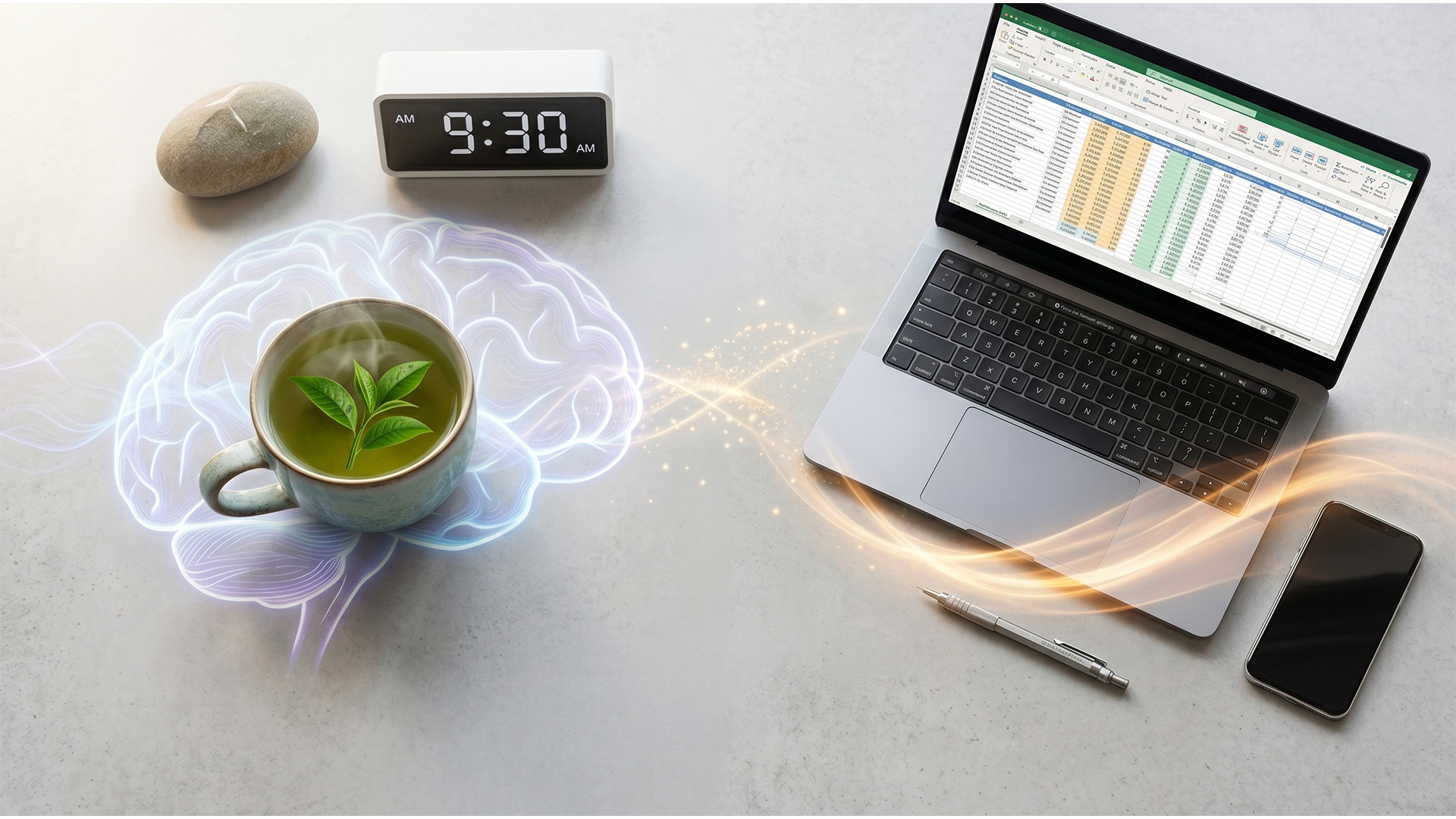
The phrase “calm focus” captures what many people want: alert enough to concentrate without feeling wired. The evidence here is most convincing when L-theanine is combined with caffeine.
Several studies examining this combination suggest it may support aspects of attention, alertness, and task switching more effectively than either ingredient alone. This makes sense because tea naturally contains both compounds, though amounts vary widely depending on tea type, growing conditions, and brewing method.
For some people, this combination may feel smoother than coffee. However, L-theanine doesn’t guarantee productivity or cancel out caffeine’s effects for everyone. Focus depends on multiple factors: sleep quality, workload, mental health, nutrition, environment, and stress levels. A cup of tea cannot solve a chaotic schedule or an exhausted nervous system.
Sleep Support: Separating Marketing from Reality
L-theanine is often marketed for sleep because relaxation and sleep are connected. If you feel calmer in the evening, you might find it easier to wind down—a reasonable possibility.
But this doesn’t mean L-theanine fixes insomnia. Sleep problems can stem from many causes: stress, pain, sleep apnoea, medication effects, shift work, depression, anxiety, or irregular routines. Persistent insomnia deserves proper assessment, especially when it affects your mood, safety, or daily functioning.
The cautious message: L-theanine may support relaxation for some people, potentially helping with evening routines. It shouldn’t be framed as an insomnia treatment.
What L-Theanine Cannot Do
Let’s be clear about what L-theanine is not:
- It’s not a cure for anxiety disorders
- It’s not a replacement for psychological care or prescribed medication
- It’s not an ADHD treatment
- It’s not a guaranteed focus tool
- It’s not automatically safe for everyone
The more dramatic claims often run ahead of the evidence, especially when L-theanine appears in products with names implying clinical effects or instant transformation. In Australia, there’s an important regulatory difference between saying a tea-derived compound may support relaxation and claiming a product treats diagnosable conditions.

Choosing Between Tea and Supplements
If you’re curious about L-theanine, tea offers the gentlest introduction. You’ll experience its effects in the context of a normal serving rather than a concentrated dose, and tea is a familiar food with a long safety history.
Supplements are different. Capsules, powders, and functional drinks vary widely in dose, quality, and formulation. Some products combine L-theanine with caffeine, herbs, or other active ingredients that can change the risk profile. Labels need careful reading—a “calm” product may contain multiple ingredients affecting alertness, blood pressure, or medication interactions.
If you choose supplements, select reputable brands, avoid exaggerated claims, and be wary of products promising instant transformation.
Safety Considerations and When to Consult a Professional
While L-theanine appears well-tolerated in many studies, supplements aren’t automatically risk-free. Speak with a qualified health professional before using L-theanine supplements if you:
- Are pregnant or breastfeeding
- Have a medical condition or take medications
- Have diagnosed anxiety, sleep disorders, ADHD, or blood pressure issues
- Use sedatives, stimulants, or other mood-affecting products
- Are considering use in children or teenagers
- Are sensitive to caffeine
Remember that study doses are research details, not personal recommendations. What was tested in a trial may not be appropriate for you individually.
The Bottom Line on L-Theanine
L-theanine represents one reason tea has entered conversations about calm alertness. It’s biologically plausible and supported by modest human evidence, but the research isn’t strong enough to claim it treats anxiety, fixes insomnia, or guarantees focus.
This makes L-theanine neither miracle nor nonsense—it’s a tea-derived compound with a measured, limited, and still-developing evidence base. For most people, the humble cup of tea remains the best metaphor: pause, enjoy it, notice how it affects you, and be cautious when marketing turns a gentle possibility into a promise.
Frequently Asked Questions
How much L-theanine is in a typical cup of tea?
A cup of green tea contains approximately 6-50 mg of L-theanine, while black tea contains 5-24 mg. The amount varies significantly based on tea type, growing conditions, and brewing method.
Can I take L-theanine supplements with my medications?
L-theanine may interact with medications, particularly those affecting blood pressure, sedatives, or stimulants. Always consult your healthcare provider before combining supplements with prescription medications.
Is L-theanine safe for children or during pregnancy?
There isn’t sufficient research on L-theanine safety in children or during pregnancy and breastfeeding. It’s best to avoid supplements and stick to moderate tea consumption, if any, after consulting with a healthcare provider.